How to Create a Cohesive Home Interior Design in Ireland
Last Updated: 27 October 2026
Quick Summary
A cohesive home interior is one where every room feels part of the same home, achieved by repeating colours, materials, lighting tones and a shared sense of style. Plan one colour palette for the whole house, limit accents to a small group and repeat them across rooms. The aim is a calm, considered look rather than identical rooms.
- Choose three to five colours in total: one core neutral, one or two supporting tones and one accent.
- Test paint on samples at least 30cm square and check them morning, afternoon and evening.
- Pick one dominant style covering about 70% of a room and a secondary style for the remaining 30%.
- Gather 15 to 25 inspiration images to build a mood board before buying anything.
- Repeat two or three materials, such as oak, brushed brass or linen, across every room.
Table of Contents
- What a Cohesive Home Interior Actually Looks Like
- Start With a Whole House Colour Palette
- How to Mix Interior Design Styles Without Clashing
- Build an Interior Design Mood Board Before You Buy
- Repeat Materials, Textures and Shapes Across Rooms
- Cohesive Home Décor Ideas That Tie Rooms Together
- Booking Your Renaissance Design Studio Consultation
- Frequently Asked Questions
What a Cohesive Home Interior Actually Looks Like
Cohesive home interior design tips all point to one idea: every room should feel like it belongs to the same home. A cohesive home interior does not mean every room matches. It means the colours, materials, shapes and styles repeat in ways that make the house feel calm and considered.
Rooms can feel disconnected once a project is finished. The hallway looks like one house, the living room like another. That gap can come from choosing each piece on its own rather than as part of a whole.
Here is what a cohesive home usually shares:
- A limited colour family that flows from room to room
- Repeated materials such as timber, brass or linen
- Consistent lighting tones, warm or cool, across spaces
- A shared sense of style, even when rooms differ in mood
Think of your home as one long story. Each room is a chapter, and the same characters should appear throughout.
Start With a Whole House Colour Palette
The fastest way to create cohesion is to plan colour for the entire home, not room by room. Pick one palette and use it everywhere.
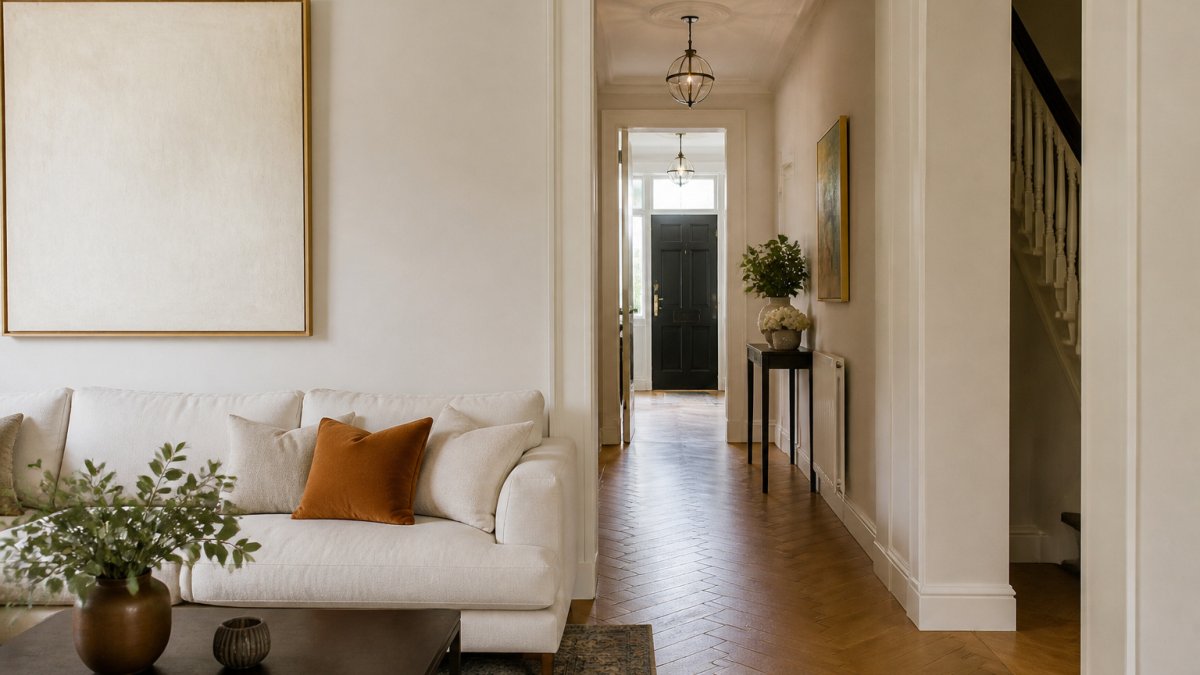
Many designers begin by choosing a single neutral base. This becomes the wall colour in most spaces. Then they add a small group of accent colours to bring in warmth and interest.
!A calm living room and adjoining hallway in a Dublin townhouse, with a shared neutral wall colour, warm timber floors and a single accent cushion repeated across the seating
Choosing Your Core and Accent Colours
Start with three to five colours in total:
- One core neutral for most walls
- One or two supporting tones for furniture and soft furnishings
- One accent colour for cushions, art or small details
Keep the accent colour in every room, even in small amounts. A deep green cushion in the living room and a green vase in the bedroom tie the two together.
A common mistake is choosing too many accent colours. Each new shade makes the home feel busier. Stick to a small palette and repeat it.
Testing Colours in Your Own Light
Paint samples often look different on your walls. Light from north-facing windows is cooler, while south-facing rooms get warmer, golden light.
Test your colours this way:
- Paint large sample patches, at least 30cm square
- Look at them morning, afternoon and evening
- Check them next to your floor and furniture
- Keep a note of which tones shift under artificial light
This simple test saves costly repainting later.
How to Mix Interior Design Styles Without Clashing
Many homes mix styles, such as a modern sofa with an antique table. This works well when the styles share a common thread. Clashes happen when they share nothing.
Try these rules:
- Pick one dominant style that covers about 70% of the room
- Add a secondary style for the remaining 30%
- Link them with colour or material, such as matching timber tones
- Balance visual weight, so a heavy piece is matched by another heavy piece nearby
Watch out: mixing too many distinct styles in one room is the most common reason spaces feel chaotic. Two styles usually work best.
Build an Interior Design Mood Board Before You Buy
A mood board lets you see the whole room before spending money. It shows how colour, texture and shape work together.
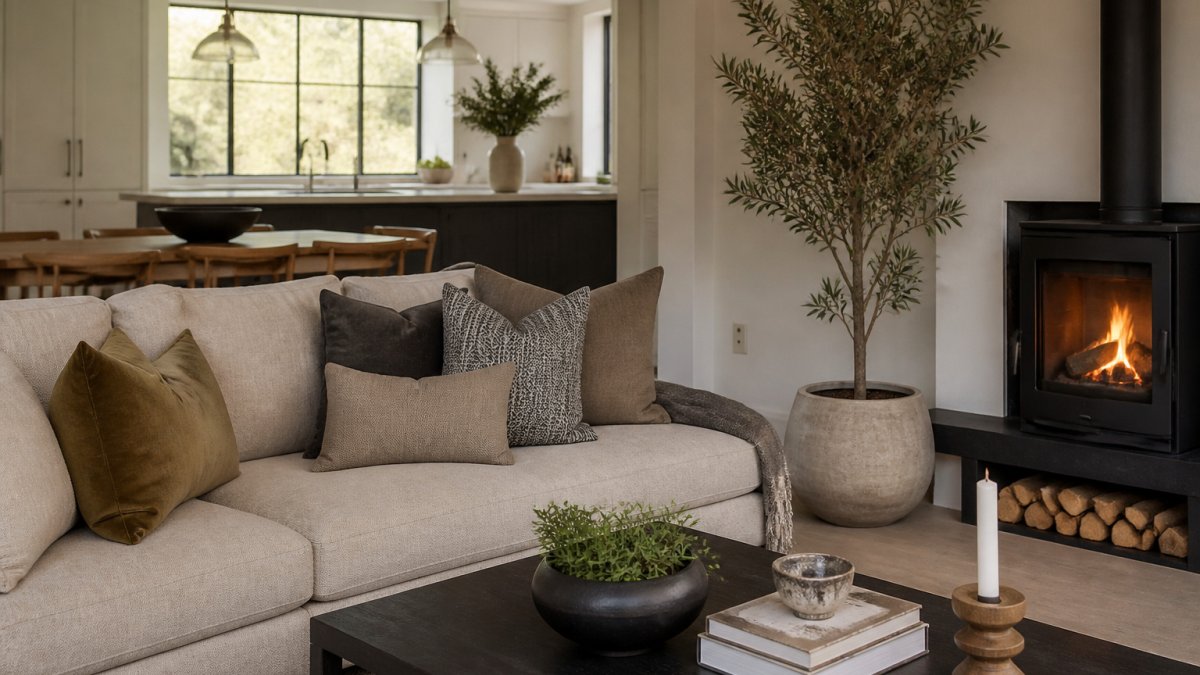
Gather images of rooms you love, then pull out the recurring elements. You might notice that most of your favourite spaces use linen, brushed brass and warm white walls.
To build a useful mood board:
- Collect 15 to 25 images that match your taste
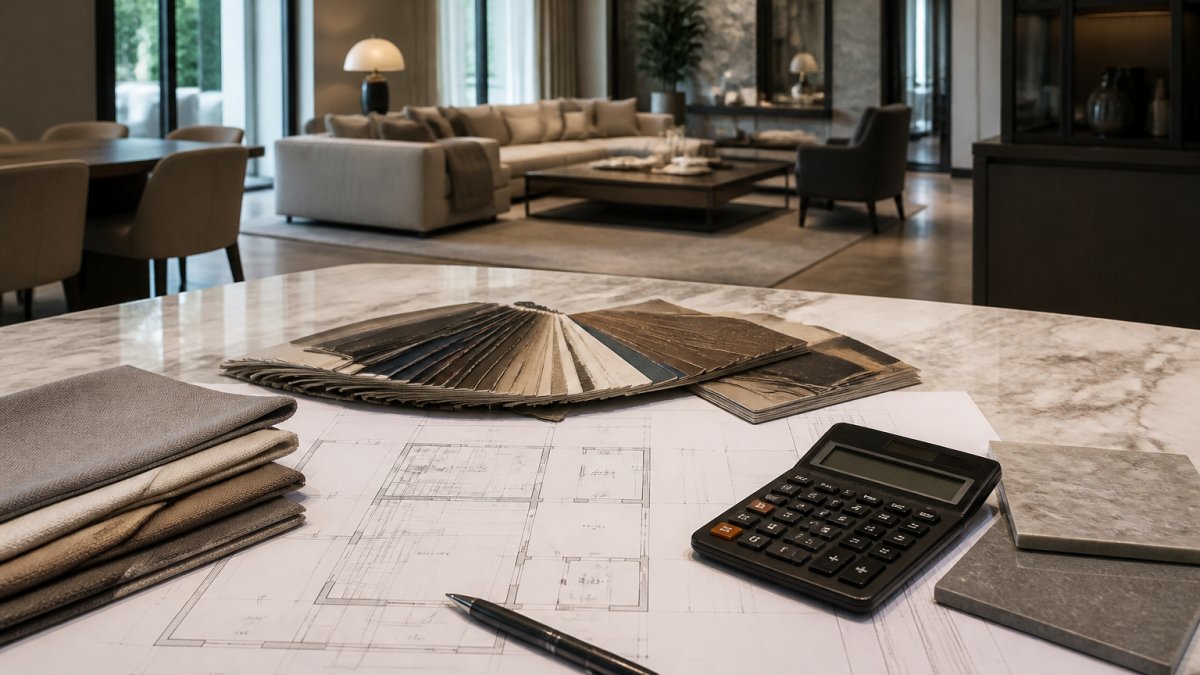
- Add fabric swatches, paint chips and material samples
- Arrange them on one board, physical or digital
- Note which pieces repeat most often
Once you have a board, check each new purchase against it. If an item does not fit the board, it probably does not belong in the home.
Repeat Materials, Textures and Shapes Across Rooms
Repetition is the quiet engine of a cohesive home. When the same materials appear throughout the house, the rooms feel connected even if their layouts differ.
Choose two or three materials to repeat, such as:
- Oak or walnut timber
- Brushed brass or aged bronze
- Linen, wool or bouclé fabrics
Shapes matter too. If your living room uses round mirrors and curved armchairs, repeat rounded forms in the bedroom with a round side table or arched headboard.
Cohesive Home Décor Ideas That Tie Rooms Together
Small décor pieces are often the easiest way to link spaces. They are inexpensive to change and quick to repeat.
Try these ideas:
- Repeat one throw blanket in two rooms, such as the Presley throw in chocolate, 150 x 200cm, €89.95, draped over a sofa or bed
- Use matching cushions in similar colours, like the Elodie cushions with fringe, 55 x 55cm, €59.95
- Carry the same window treatment style across rooms, such as Roman blinds in one fabric family
- Choose one dining table finish and repeat the leg colour in other rooms
Keep these pieces in mind:

- Use odd numbers when grouping décor, such as three vases
- Repeat each accent in at least two rooms
- Leave some space empty so the room can breathe
Booking Your Renaissance Design Studio Consultation
Planning a cohesive home takes time, and many homeowners prefer expert help. At Renaissance Design Studio, we offer a range of consultation options, from a showroom visit to a full turn-key fit-out.
A showroom consultation lets you see complete room settings. An in-home consultation includes a two-hour visit from one of our interior designers, covering up to three rooms. After an in-store consultation, we create mood boards based on the rooms discussed and the style you are seeking.
If you want a full project, we will provide an estimated quote once we have reviewed your brief. You can book a design consultation directly, and you can check the design consultation fee of €1,000.00 before you commit. Our team at Renaissance Design Studio helps clients avoid costly and stressful furnishing mistakes.
Frequently Asked Questions
How do you make a home feel cohesive?
A home feels cohesive when the rooms share a few repeated elements rather than matching everything. Pick a palette of three to five colours that runs through the whole house, repeat two or three materials such as oak, brass or linen, and keep a consistent level of formality. Then vary the scale and placement of pieces so each room still feels distinct. Walking from one room to the next should feel like the same home, not a series of separate schemes.
Do all the rooms in a house need to match?
No, they do not need to match, but they should relate to each other. Matching furniture sets across every room often look flat. A better approach is shared undertones, a common metal finish, and consistent window treatments, with each room allowed its own character. A soft, muted accent colour that appears in the hallway, living room and bedroom is usually enough to connect the spaces without making them identical.
How can you make different interior styles work together?
Mixing styles works when one style leads and the others support it. Choose a dominant direction, such as contemporary or classic, and bring in secondary pieces that share its proportions or colour temperature. Limit the number of competing textures and keep at least one element, like a rug or a lamp finish, repeated across the mix. Mood boards help test whether the combination holds together before any furniture is bought.
Can you create a cohesive home without buying matching furniture?
Yes. Cohesion comes from repetition and proportion rather than identical pieces. Use the same wood tone, upholstery family or hardware finish across different furniture, and tie the room together with cushions, throws and art that share a palette. A single well-chosen throw in a colour from the main palette, such as the Presley throw in chocolate at €89.95, can link a sofa, a chair and a bed without any of them needing to match.
Get started with Renaissance Design Studio today and turn your house into one considered, cohesive home.