7 Ways to Furnish a High-End Home That Works and Cheers
Last Updated: November 19, 2026
Quick Summary
To furnish a high-end home well, plan each room before buying, then choose furniture for proportion and scale. Layer natural textures, invest in made-to-order pieces where standard sizes fail, and spend most on the items you use daily. Measure the room and the delivery route first.
- Write a short brief for each room covering its purpose, users, light and required pieces.
- Keep at least 90 cm of walkway between furniture pieces in a living room.
- Allow 75-90 cm behind each dining chair so it can pull out freely.
- A sofa should occupy no more than two-thirds of the wall it sits against.
- Check door widths, stair turns and lift sizes before ordering any large piece.
Table of Contents
- Start With a Room-by-Room Furnishing Plan
- Choose Furniture for Proportion and Scale
- Layer Texture, Fabric and Natural Materials
- Solve Awkward Living Room Layouts With the Right Pieces
- Invest in Bespoke Furniture for the Home Where It Matters
- Book Your Free In-House Design Session to Begin Your Home
- Frequently Asked Questions
Start With a Room-by-Room Furnishing Plan
Furnishing a high-end home works best when you plan each room before you buy anything. A living room, dining room and bedroom each carry different demands, and a plan keeps the pieces working together rather than competing. At Renaissance Design Studio, we begin every project with a room-by-room brief, because it stops the common mistake of buying a statement sofa before you know what the rest of the room needs.
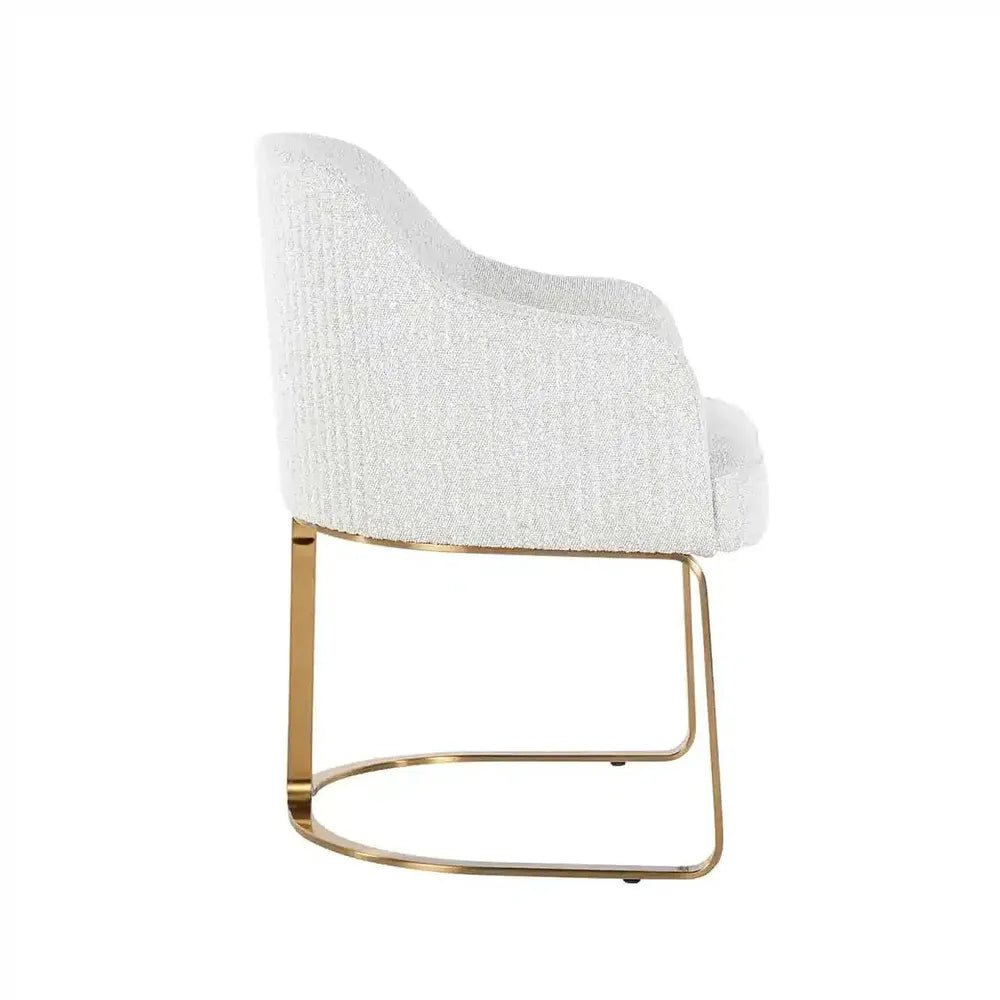
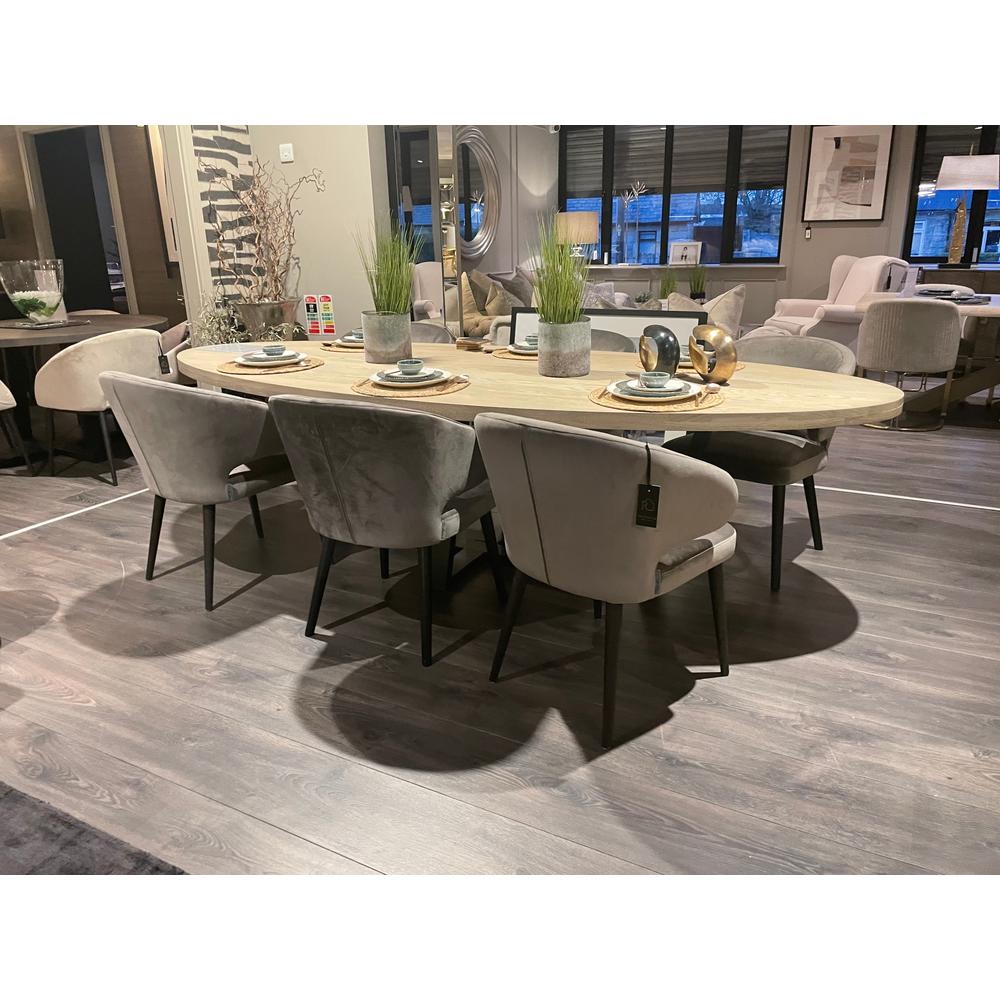
Write a short list for each room. Note its main purpose, how many people use it, the natural light and the pieces it must hold. A dining room needs a table sized for the number of chairs you want, with clear space behind them to pull out. A bedroom needs a bed scaled to the room, plus storage that does not crowd the walk-around space.
Set a budget for each room as well. Splitting the total across rooms shows you where to spend and where to hold back. Putting more of the budget into the pieces you touch every day, such as seating, the dining table and bedding, is a sensible approach.
| Room | Main purpose | Key pieces to plan | Where to spend |
|---|---|---|---|
| Living room | Daily seating and relaxing | Sofa, coffee table, lighting | Sofa and coffee table |
| Dining room | Regular meals and guests | Table, dining chairs, chandelier | Table and chairs |
| Bedroom | Rest and storage | Bed, chest of drawers, mirror | Bed and storage |
Choose Furniture for Proportion and Scale
Proportion is where most furnished rooms go wrong, even when every piece is well made. A sofa that is too large for the wall swallows the room, and a small coffee table gets lost in front of it. The fix is to measure first and buy second.
Start with a floor plan. Draw the room to scale on graph paper or use a free planning app, marking doors, windows, radiators and the fireplace. Then measure the clear floor space, the area not taken by built-in storage or fixed elements. For a living room, aim to keep at least 90 cm of walkway between furniture pieces and 45 cm between a sofa and a coffee table. In a dining room, allow 75-90 cm behind each chair so it can pull out without scraping the wall.
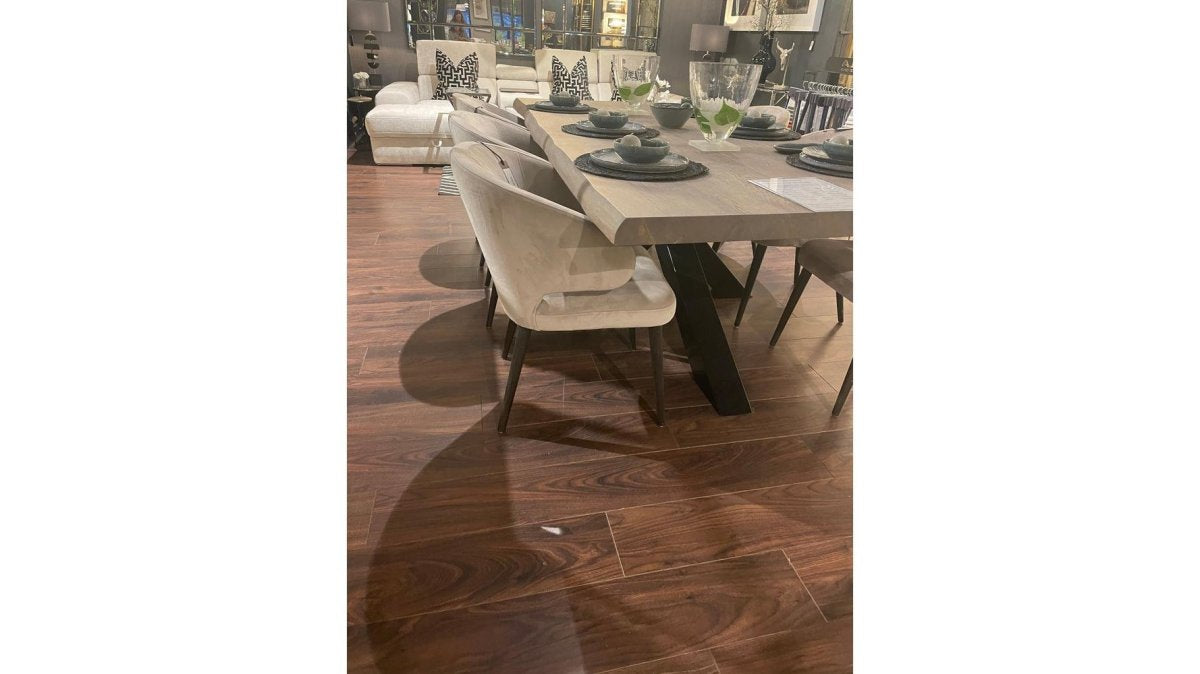
Next, scale each piece to the room, not to the wall. A common mistake is to buy a sofa that fills the entire wall, leaving no breathing space at either end. As a rule, a sofa should occupy no more than two-thirds of the wall it sits against. For a large room, a 240 cm dining table like the Eichholtz Atelier Dining Table can suit the space, provided there is clearance on all sides for chairs and circulation.
Balance is about visual weight as much as dimensions. A heavy, dark piece on one side of the room needs a counterweight: a lighter piece, a mirror, or a tall plant. In a large room, create zones rather than spreading furniture thinly. A seating area anchored by a rug, a reading corner with a wing chair and lamp, and a console table against a long wall will make the space feel intentional rather than empty.
Watch out: measuring the room but not the delivery route is a common error. Check door widths, stair turns and lift dimensions before ordering, a sofa that cannot fit through the door is an expensive mistake.
Finally, use the product dimensions listed online as a starting point, but verify them against your own measurements. A little breathing space around each piece can make a room feel more considered than filling every corner.
Layer Texture, Fabric and Natural Materials
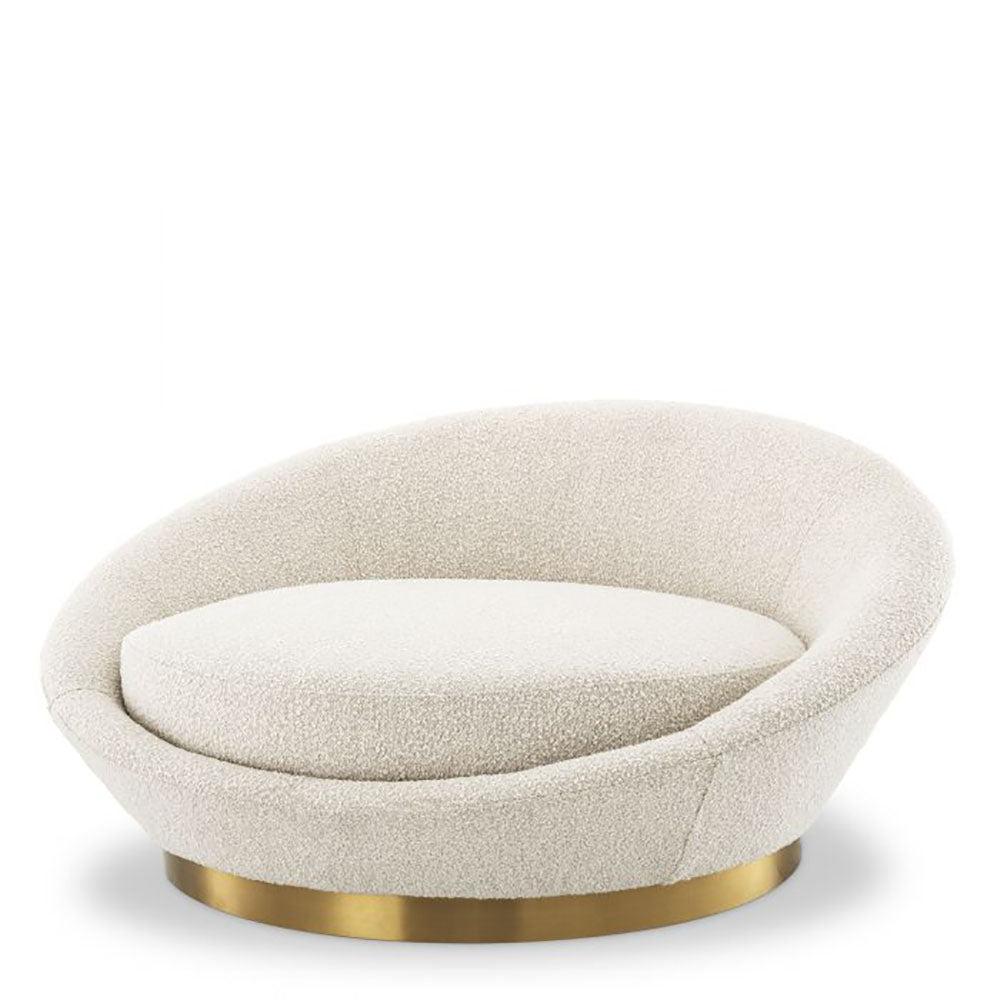
Texture gives a high-end room depth. A room with only smooth surfaces can feel flat, while a mix of soft, natural and reflective materials draws the eye and invites people to sit down. Aim for several textures in each room, such as a bouclé sofa, a marble-topped table and a linen artwork.
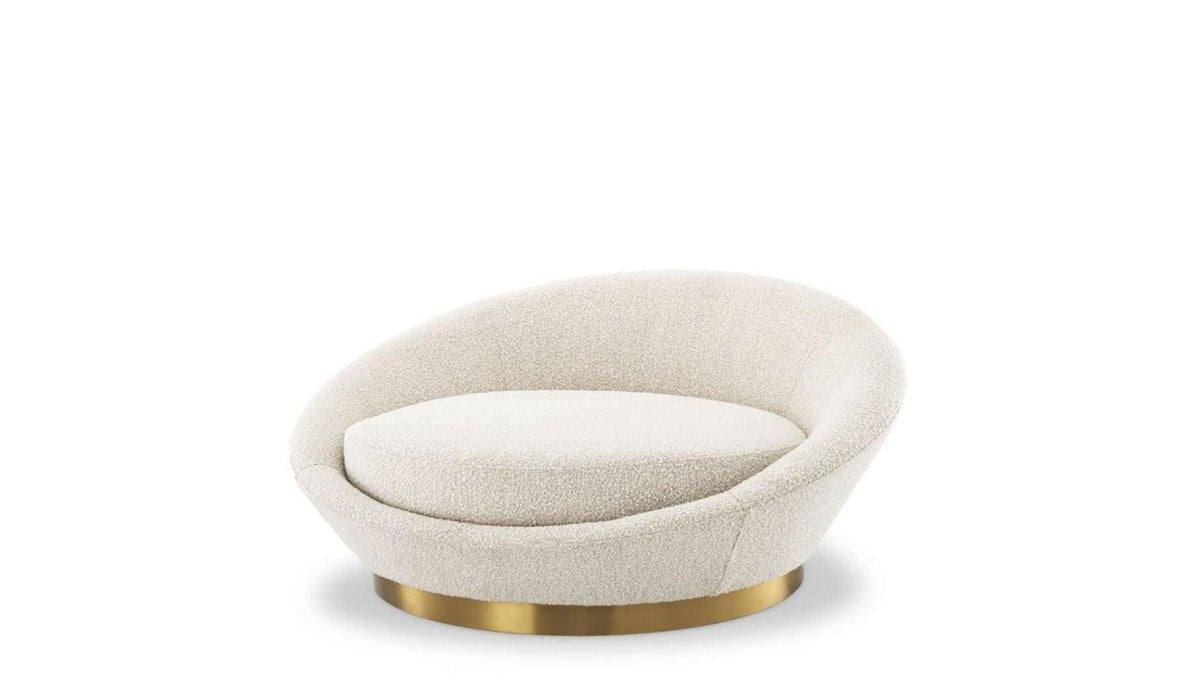
The Sofa Duardo in cream bouclé, with its brushed brass finish base, shows how texture and metal can sit together. Pair it with a marble-topped coffee table like the Maigue, and the contrast between soft fabric and cool stone looks deliberate. Keep the colour palette neutral so the textures do the work.
Choose natural materials where you can. Wood, stone, linen and wool age well and suit a considered interior. Veneer furniture, such as the washed oak Dimitrios chest, needs gentle care: keep it away from direct sunlight and damp, and use coasters.
Solve Awkward Living Room Layouts With the Right Pieces
Awkward rooms are common in many homes. Bay windows, sloping ceilings, doorways on two walls and an open-plan area that needs two zones can all make furnishing difficult. The right pieces solve more of the problem than the arrangement alone.
Start by choosing a focal point, usually the fireplace, a window or a view. Then place the largest piece to face it. Where the room has no clear focal point, a statement piece such as the Aldo 12-light bronze chandelier can give the eye somewhere to land, particularly in a double-height space.
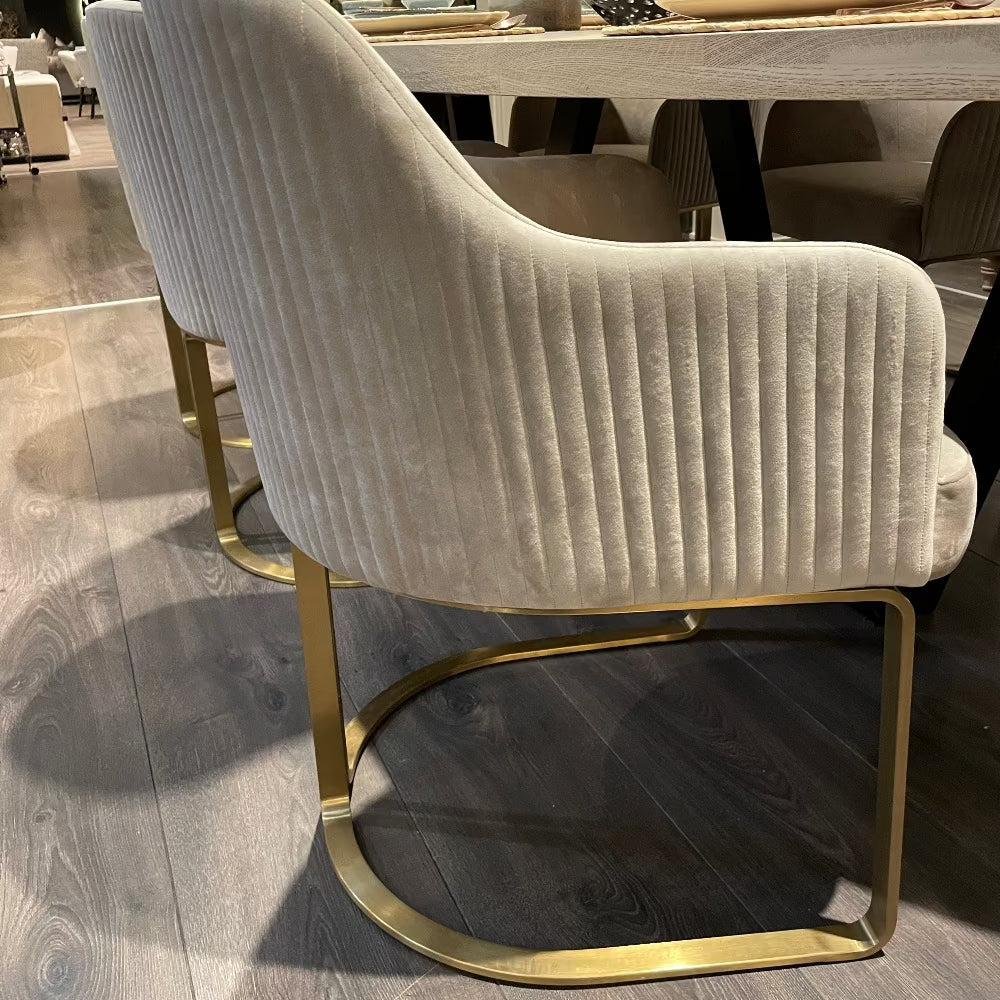
Use smaller, movable pieces to define zones. A wing chair works well in a corner or beside a reading lamp, and a footstool can add seating without blocking a walkway. The Heather wing chair is made to order in your choice of fabric.
Invest in Bespoke Furniture for the Home Where It Matters
Bespoke furniture can make sense where standard sizes do not fit. An unusual alcove, a long wall or a specific colour that matches existing fabrics can all justify a made-to-order piece. Made-to-order work also lets you choose the finish, the fabric and the foot style, rather than settling for what happens to be in stock. But bespoke is not automatically better, it depends on how it is made and what you are comparing it to.
Start by understanding what you are paying for. When judging furniture, look at how it is built: solid hardwood frames and sound joinery are good signs, and it is worth asking about the origin of materials.
Compare bespoke with high-quality ready-made. Ready-made pieces from reputable brands can offer excellent value, especially for dining chairs and occasional furniture. Bespoke wins where you need a specific size, a particular fabric or a finish that matches existing woodwork. It also wins on longevity: a well-made bespoke sofa can be reupholstered rather than replaced, which is better for the environment and often cheaper over decades.
Lead times are the trade-off. Made-to-order furniture takes time, so plan your timeline accordingly. Plan your timeline around this, order bespoke items first, then fill gaps with stock pieces that can arrive sooner. Delivery and installation should be factored into your budget.
Our advice is to spend on the pieces that take the most wear, sofas, dining tables, beds, and to ask about how each one is made. The Heather wing chair, for example, is crafted from solid hardwood and offers a choice of finishes and castors. Our design sessions are a good place to test these decisions before you commit.
Book Your Free In-House Design Session to Begin Your Home
Every good room starts with a clear plan, and the fastest way to get one is a conversation. Our in-house design sessions let you walk through your rooms with one of our designers and test proportions before you commit to anything. Bring your room measurements, floor plans or photographs if you have them.
We would encourage you to visit the showroom to see the pieces in person. Our displays are designed as complete rooms, so you can see how pieces work together.
When you are ready, complete the application form and we will arrange your design session. At Renaissance Design Studio, we aim to give you a home that works and cheers, with the best value and fit for your family.
Frequently Asked Questions
How do you furnish a high-end home?
Start with a room-by-room plan that sets the budget, scale and palette before buying anything. Choose a few hero pieces, such as a sofa, a dining table or a statement light, and build the rest around them. Quality matters more than quantity: a well-made piece in a considered finish will look better and last longer than several stock items bought on price alone. Renaissance Design Studio offers a free in-house design session to help you plan the sequence.
Should you furnish a home room by room?
Furnishing room by room works well for a high-end home because each space has its own use, light and proportion. Plan the whole house first so that colours, metals and materials repeat across rooms and feel cohesive. Then buy in the order that matters most, usually the main living area and dining room, so you can live with the result while the rest follows. A room-by-room plan also makes budget allocation far clearer.
How do you mix bespoke and ready-made furniture?
Use bespoke pieces where proportion, fit or finish matters most, such as a made-to-order wing chair in a chosen fabric, and ready-made pieces where a standard size works. Keep the palette and metal finishes consistent across both so they read as one scheme. At Renaissance Design Studio, our designers can advise which pieces suit made-to-order production and which are better bought from the showroom.
What should you consider when furnishing an awkward living room?
Measure the room and mark the doorways, windows and radiators before choosing any furniture. Pieces such as a loveseat or a compact coffee table often suit awkward footprints better than a large sofa. Think about where the focal point sits and arrange seating around it, leaving clear walking routes. A lighting plan with a statement pendant can also anchor a room with an unusual shape.