

Article: How Do You Choose Mirrors for a Renovated Home?

How Do You Choose Mirrors for a Renovated Home?
Last Updated: 18 November 2026
Quick Summary
To choose mirrors for a renovated home, start with placement: a mirror facing a window doubles daylight, while one facing a bare wall or clutter adds nothing. Then match the frame to the room's style, and for bathrooms pick a mirror made for damp rooms that is no wider than the vanity top.
- Place a large living room mirror opposite the main window to bounce light.
- Skip a mirror in a hallway leading straight to a bathroom or bedroom door.
- Match frames to the room: frameless or slim metal for modern, minimalist schemes.
- A vanity mirror should be no wider than the vanity top and centred over the basin.
- A mirror should fill roughly two-thirds of the wall space or furniture it sits above.
Table of Contents
- Where to Place Mirrors in a Home After a Renovation
- Mirror Styles for Different Interior Design Styles
- How to Choose a Bathroom Mirror That Fits the Vanity
- Frequently Asked Questions
Where to Place Mirrors in a Home After a Renovation
A mirror is the fastest way to make a freshly finished room feel complete, and knowing how to choose mirrors for a renovated home starts with placement. A well-placed mirror can do more for a room than a wall of new furniture when it reflects something worth seeing.
A mirror facing a window doubles the daylight; one facing a bare wall adds nothing; one facing clutter simply doubles the clutter.
- Entrance hall: a full-length mirror near the door.
- Living room: a large mirror opposite the main window, to bounce light.
- Bedroom: a floor mirror in a corner, angled slightly toward the bed.
- Landing or stairwell: a tall mirror on the widest wall, to open up the space.
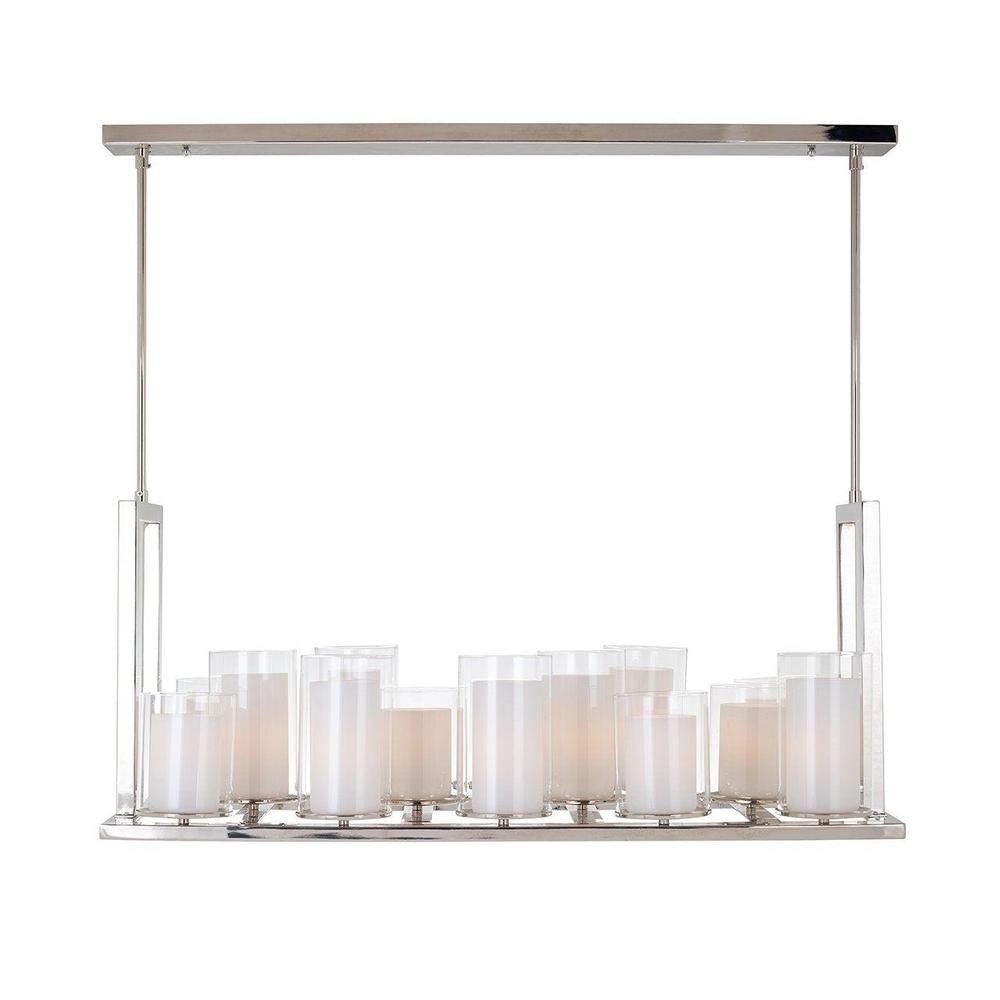
One warning: skip the mirror in a hallway leading straight to a bathroom or bedroom door, reflecting a private room back at you gets uncomfortable fast. If you would rather have help deciding, you can book an interior designer by the hour, or read our guide on how to avoid interior design mistakes in your home before you start drilling.
Here is where each mirror belongs, room by room.
| Room | Placement |
|---|---|
| Entrance hall | Full-length mirror near the door |
| Living room | Large mirror opposite the main window |
| Bedroom | Floor mirror in a corner, angled toward the bed |
| Landing or stairwell | Tall mirror on the widest wall |
| Hallway to bathroom or bedroom | Skip it, reflection feels uncomfortable |
Mirror Styles for Different Interior Design Styles
The right mirror should look like it was always meant to be there. Match the frame to the room, not to your mood on shopping day.
- Modern and minimalist: frameless or slim metal-framed, clean lines.
- Classic and traditional: an ornate frame in antique gold or bronze.
- Contemporary: an arched mirror with fine metal trim.
- Warm and natural: wood or brushed brass, to echo timber and stone.
For pared-back schemes, our guide to modern minimalist interior design for luxury is worth a read. A common mistake is buying a heavy, ornate frame for a room with plain walls and pale floors, it fights the space instead of finishing it.
How to Choose a Bathroom Mirror That Fits the Vanity
A vanity mirror should be no wider than the vanity top and centred over the basin so you can see yourself without leaning sideways. Height matters too: the mirror should sit at eye level for the tallest regular user, not the shortest.
You can view our Hollywood arch vanity mirror in gold or see the LED strip arch vanity mirror to compare the two.
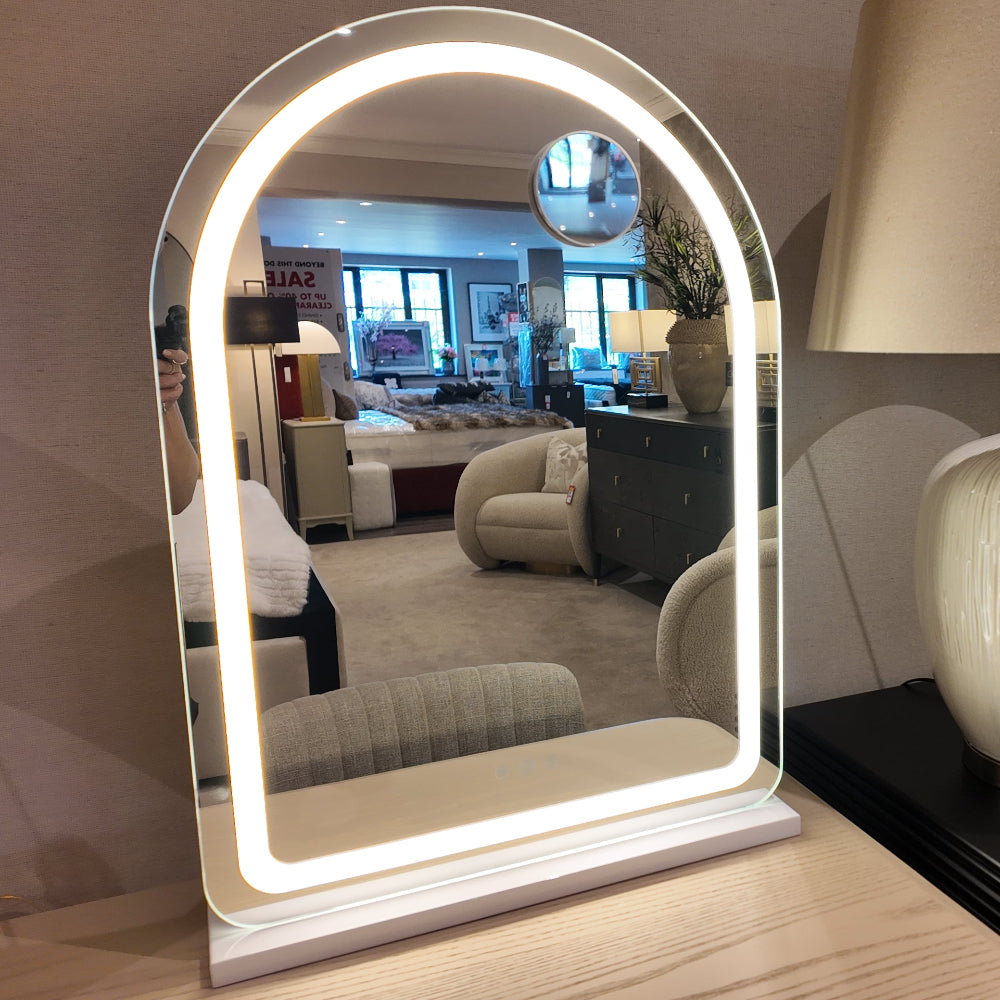
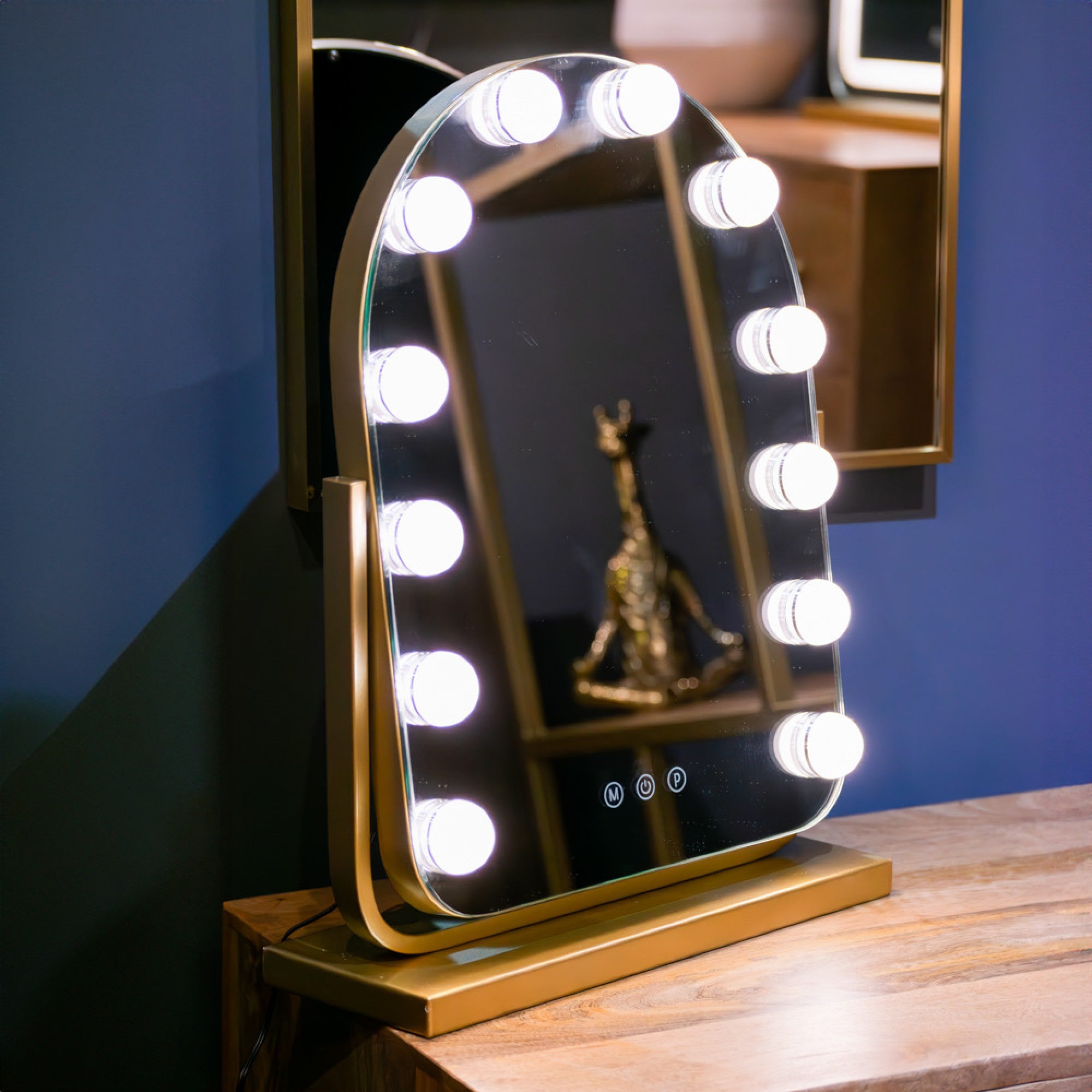
Our antique bronze floor mirror is not suitable for bathroom use, keep it in a hall or bedroom instead.
A renovated home deserves mirrors that fit the space, not just fill it. Renaissance Design Studio is an award-winning studio with 22 showroom displays under one roof, an expert in-house design team, and a free design session to help you get it right. Get started with Renaissance Design Studio and finish your renovation with mirrors you will love.
Frequently Asked Questions
How do I choose the right size mirror for a room?
Match the mirror to the wall and the furniture beneath it rather than to the room alone. As a working rule, a mirror above a console or sideboard should span roughly two-thirds to three-quarters of the furniture's width, and a full-length mirror needs enough clear floor space in front of it to step back and get a head-to-toe view. In a hallway, measure the wall first and leave breathing room at each side so the mirror reads as part of the scheme, not a filler.
What type of mirror is best for a bathroom?
Bathrooms need a mirror made for the room, not just a pretty frame. Check the listing before you buy: our Antique Bronze floor mirror, for example, is explicitly not suitable for bathroom use.
How can mirrors make a small room look bigger?
Placement does more than size. A mirror that reflects a window, a garden view or a lighter wall will bounce daylight into the room and make the space feel deeper. Avoid positioning one so it reflects clutter, a dark corner or a blank wall, which has the opposite effect. Our Draven arch mirror in champagne gold, at 160cm high and 60cm wide, is one example of a tall, narrow mirror.


