Article: Cost of a Full House Interior Fit-Out in Ireland
Cost of a Full House Interior Fit-Out in Ireland
Last Updated: November 3, 2026
Quick Summary
A full house fit-out in Ireland costs far more than furniture alone, as it covers design, labour, materials, finishes, lighting, soft furnishings and delivery. Design fees are typically charged as a fixed fee, hourly rate or percentage of the project value. The most reliable way to know the cost is to request a written estimate that breaks the full house fit-out into separate lines.
- A full house fit-out covers design, labour, materials and furnishings, not just furniture.
- Interior designer fees are usually fixed, hourly or a percentage of total project value.
- Ask for every quote line on the same VAT basis before comparing prices.
- Cost per square metre should be tied to a named standard, mid or high finish level.
- Hold a contingency in your furnishing budget and review it at each approval stage.
Table of Contents
- What a Full House Interior Fit-Out Actually Covers
- Interior Designer Fees and How They Are Charged
- Interior Fit-Out Cost Breakdown: Design, Labour, Materials and Furnishings
- Setting a Home Furnishing Budget That Holds
- Factors That Push the Total Up or Down
- How Long a Full Fit-Out Takes: The Project Timeline
- Booking Your Consultation and Getting a Written Estimate
- Frequently Asked Questions
What a Full House Interior Fit-Out Actually Covers
A full house interior fit-out is the complete process of taking a home from bare or dated rooms to a finished, furnished and fully styled interior. The cost of a full house interior fit-out in Ireland depends on far more than the furniture alone. It includes design, project management, labour, materials, finishes, lighting, soft furnishings and delivery.
At Renaissance Design Studio, we treat a fit-out as one coordinated project rather than a series of separate purchases. Many homeowners in Dublin begin by buying a sofa here and a dining table there, only to find the pieces clash, the sizes are wrong or the finishes do not match across rooms.
A full fit-out usually covers:
- Space planning and room layouts
- Colour schemes, finishes and materials
- Lighting design and fittings
- Joinery, built-in storage and bespoke pieces
- Furniture, rugs, curtains and accessories
- Delivery, installation and styling on completion
Knowing this scope is the first step to reading any quote accurately. A figure that covers only furniture will look much lower than one that includes design time, installation and finishing touches, so always check what is included before comparing prices.
Interior Designer Fees and How They Are Charged
Interior designer fees in Ireland are usually charged in one of three ways: a fixed project fee, an hourly rate, or a percentage of the total project value. Each model suits a different kind of job, and the right choice depends on how defined your brief is.
A fixed fee works well when the scope is clear, such as designing a single living room. An hourly rate suits smaller, open-ended consultations. A percentage-based fee is common on large whole-home projects, though it can be harder to predict because it rises as the budget grows.
At Renaissance Design Studio, our Design Consultation Fee is set at €1,000.00 and covers a structured start to your project. The consultation can include a showroom visit, an in-home visit of up to two hours covering a maximum of three rooms, and mood boards that show how each room will look once finished. Where you need more than advice, our turn-key service begins with a consultation and then an estimated quote, which you approve before work starts.

When comparing designers, ask exactly what the fee covers, whether travel is included, how many revisions are allowed and when payments fall due. Use how to choose an interior designer in Dublin step by step to work through these questions before you sign anything.
Interior Fit-Out Cost Breakdown: Design, Labour, Materials and Furnishings
A complete fit-out budget is easiest to understand when split into four parts: design, labour, materials and furnishings. Design covers the planning and specification work. Labour covers installation, decorating and any building trades. Materials cover flooring, tiling, joinery and fixtures. Furnishings cover the pieces you live with every day.
Keeping these four lines separate makes quotes easier to compare. One designer may include delivery and styling in the price, while another charges for them separately. Without a breakdown, you cannot tell which quote is genuinely better value.
The exact split moves with the finish level and the amount of bespoke joinery, so treat any proportion as a starting point for discussion rather than a rule. Ask each supplier to state which line their figure belongs to, and rebuild the total yourself before comparing quotes.
Ask for a written estimate that shows each category on its own line. If a figure is missing, ask whether it is excluded or included elsewhere. VAT should also be checked. Confirm in writing whether each line is quoted inclusive or exclusive of VAT and at what rate.
Professional fees are easy to overlook. A full fit-out may need a surveyor, an engineer or a BER assessor alongside the designer, particularly where layout changes or new services are involved.
Watch out: a quote that appears cheaper often excludes delivery, installation, styling or VAT, and the gap can be large enough to reverse the comparison once those lines are added back in.
Cost Per Square Metre by Finish Level
Cost per square metre gives a rough way to compare projects of different sizes, but it only means something when you know the finish level. A standard specification uses durable, mid-range materials and simpler joinery. A luxury specification uses premium surfaces, bespoke joinery and higher-end lighting and hardware. The gap between the two is often wide, so the same floor area can produce very different totals.
A practical way to use the measure is to ask for three rates for your property: a standard, a mid-range and a high-specification rate per square metre, each tied to a named finish level and a stated scope. That gives you a range to plan against rather than a single figure that may not reflect what you actually want. The rate should state whether it covers furnishings, labour and design or only part of the package.
Because published rates vary widely, we recommend asking for a cost-per-square-metre estimate tied to a named finish level rather than relying on a general figure. A reliable quote will state the finish level it is based on and the square metre area it covers.
Room-by-Room Fit-Out Costs
Room-by-room costing shows where the budget actually goes. Kitchens and bathrooms usually absorb the largest share because of joinery, plumbing, tiling and appliances. Living rooms and bedrooms tend to be driven by furniture, rugs, curtains and lighting. Hallways and utility spaces are typically the least expensive but still need coordinated finishes.
A useful mechanism is to build a simple schedule with one row per room and one column per budget line: design, labour, materials and furnishings. Fill in what you know, mark what is still to be quoted, and keep a running total. This makes it obvious which rooms are driving the budget and where a change of specification would have the greatest effect.
Building the budget room by room lets you decide where to spend more and where to economise. You may choose a premium sofa in the living room and a practical storage solution in the utility room. Keeping a clear room list also makes it easier to add or remove rooms as the project develops, and it gives you a fair basis for comparing quotes that cover different numbers of rooms.
The article sets out the main cost categories and the scale of the costs involved, summarised below.
| Cost line | What it covers | Note |
|---|---|---|
| Design | Planning and specification work | Ask which line a figure belongs to |
| Labour | Installation, decorating and building trades | Price installation as a separate line |
| Materials | Flooring, tiling, joinery and fixtures | Check VAT treatment on each line |
| Furnishings | Pieces you live with every day | Often excludes delivery or styling |
| Professional fees | Surveyor, engineer or BER assessor | Confirm if inside the design fee |
| Cost per m² | Rate tied to a named finish level | Ask for standard, mid and high rates |
Setting a Home Furnishing Budget That Holds
A furnishing budget holds when it includes a contingency and is reviewed at each stage. Without a contingency, a single change of mind or a damaged delivery can push the project over budget.
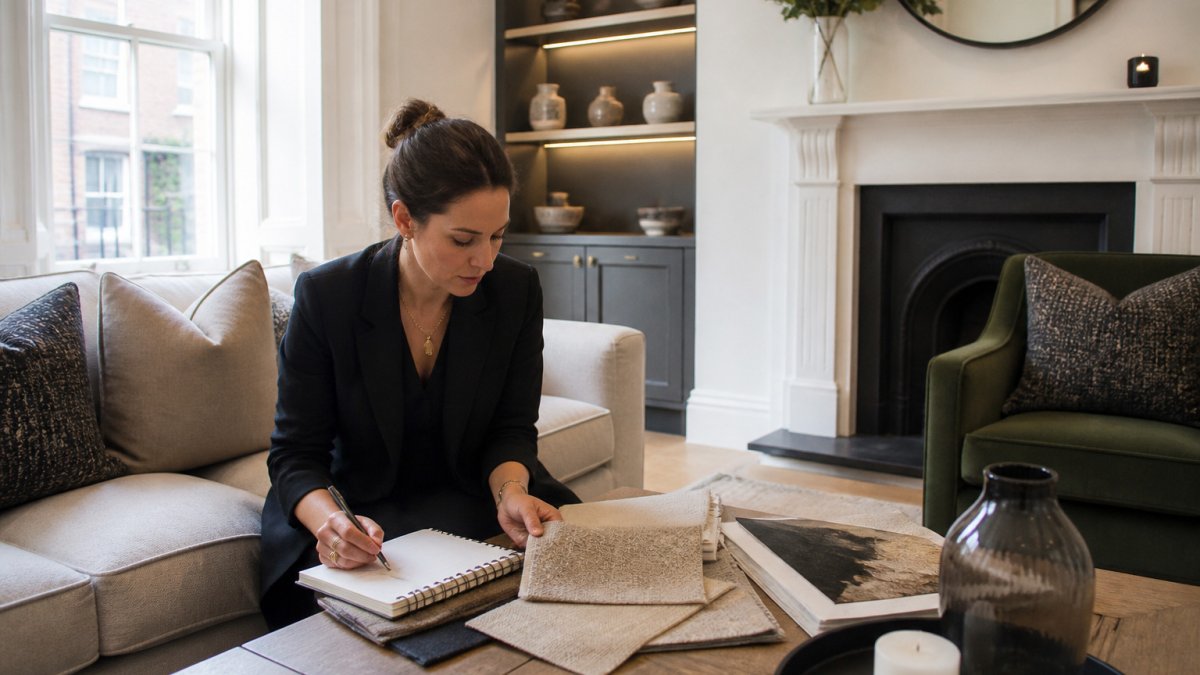
Start with a total figure you are comfortable with, then assign amounts to each room and each category. Set aside a contingency for unexpected costs. Review the budget after each approval, before orders are placed.
Keep track of the decisions that change cost most: layout changes, upgraded finishes, and pieces ordered outside the original plan. Recording these as they happen avoids surprises at the final invoice.
Factors That Push the Total Up or Down
Several factors shape the final cost of a full house interior fit-out. The size of the property and the number of rooms are the most obvious.
What separates a controlled budget from an overspent one is usually not the headline rate but the decisions taken after the first quote.
Structural or building work before fitting out. Removing walls, altering services or correcting damp adds cost and time before any furnishing begins.
Specification level. Upgrading flooring, worktops, hardware or lighting has a compounding effect because the same upgrade is repeated across every room.
Bespoke and imported pieces. Made-to-measure joinery and imported furniture carry longer lead times and less flexibility on price.
Installation complexity. Lighting circuits, built-in storage and heavy pieces require more labour and sometimes a specialist.
Access and delivery. Restricted access, stairs, parking limits and building rules can increase delivery and labour time. Flag access issues at the quotation stage rather than on delivery day.
Professional and compliance costs. Surveying, engineering, BER assessment and any required certification are easy to leave out of a fit-out budget.
VAT treatment. Mixing VAT-inclusive and VAT-exclusive lines distorts comparisons. Ask for every line to be shown on the same basis.
How Long a Full Fit-Out Takes: The Project Timeline
A full house fit-out typically moves through a consultation, design development, quotation approval, ordering, installation and final styling. The consultation and design phase is where most of the planning happens and should not be rushed, because decisions made here affect everything that follows.
Ordering is often the longest stage. Made-to-measure and imported pieces can take several months to arrive, so the timeline should allow for lead times rather than assuming everything can be delivered at once. Installation then runs room by room, with final styling completed once the main pieces are in place.
Ask for a written timeline with key milestones, and check how delays from suppliers will be communicated.
Booking Your Consultation and Getting a Written Estimate
The best way to understand what a full house interior fit-out will cost you is to book a consultation and receive a written estimate. Our process begins with a consultation where we learn about your home and your requirements. An estimated quote is prepared for you to review and approve.
Our Installation and Fit-Out Service can include delivery by a two- to three-person team, furniture setup in your chosen room, removal of cardboard and packaging, and an interior designer on site for finishing touches. Pricing for this service is provided on application.

For apartments, our luxury apartment fit-out furniture sets start from €550.00, with prices including VAT, and cover items such as coffee tables, side tables, storage ottoman beds, dining tables and luxury chairs. Once you have your written estimate, you can compare it line by line against the breakdown outlined above, and make an informed decision about your full house interior fit-out.

Frequently Asked Questions
How much does a full house interior fit-out cost?
The total depends on floor area, finish level and how much is furnished. Renaissance Design Studio's Design Consultation Fee is €1,000.00, and a luxury apartment furniture set starts from €550.00 with VAT included. Installation and delivery services are priced on application, so the final figure is set after the brief has been reviewed and an estimated quote has been approved. Ask for every line of that estimate in writing before you commit.
What is included in a full house interior fit-out?
A full fit-out typically covers the design brief, room-by-room layouts, mood boards, the furniture and furnishings specified, delivery, and on-site setup with finishing touches. Renaissance Design Studio's full design and fit-out service begins with a meeting with one of its interior designers, after which an estimated quote is provided. Check whether packaging removal, soft furnishings and accessories are included, as these are often left out of quotes.
How much should I budget for furniture and furnishings?
Furniture and furnishings are usually the largest single cost after design fees. Allocate a separate budget line for furniture, soft furnishings, lighting and accessories, and hold back a contingency for changes. Start from the room-by-room list you agree with your designer, then compare the estimated quote against it. Keeping furnishings in one contract makes it easier to track spend and to see where savings can be made without affecting the overall look.