Article: Home Office Lighting: How to Choose the Right Light
Home Office Lighting: How to Choose the Right Light
Last Updated: 20 November 2026
Quick Summary
Good home office lighting starts with daylight, so position your desk perpendicular to the window and then supplement the sun with layered lamps rather than one overhead fitting. Keep desk lamps at 4000K for focus and ambient light warmer at 3000K, angling shades downwards to cut screen glare.
- Position your desk perpendicular to the window rather than facing the glass to avoid glare and shadow.
- The best colour temperature for office lighting sits between 3000K and 4000K.
- Keep the desk lamp at 4000K for focus and let the ambient layer run warmer at 3000K.
- Layer ambient, task and accent light from three separate fittings, dimming each layer separately if you can.
- Place lamps to the side of the screen and angle shades downwards so the bulb is hidden from eye level.
Table of Contents
- Start With Daylight, Then Build Your Home Office Lighting Around It
- The Best Colour Temperature for Office Lighting
- How to Reduce Screen Glare With Lighting
- Layered Lighting Design for Home Offices
Start With Daylight, Then Build Your Home Office Lighting Around It
Good home office lighting begins with the sun, not the ceiling. Before you buy a single lamp, watch how daylight moves through the room: which wall it hits at 9am, where it lands at 3pm, and when it fades. That pattern decides everything else.
Position your desk perpendicular to the window rather than facing it. Facing the glass puts bright daylight directly behind your screen, so your eyes constantly readjust between glare and shadow. Side-on, daylight washes across the desk without fighting the monitor.
Then supplement daylight rather than replace it. A room that is bright at noon and dim by four needs lamps that pick up where the sun leaves off, not a single overhead fitting doing all the work. At Renaissance Design Studio, we plan lighting in layers, because a scheme built around daylight looks calmer and more considered than one bolted on afterwards.
If the room's finishes are still undecided, our guide on choosing designer wallpaper for luxury interiors pairs well with this stage of planning.
The Best Colour Temperature for Office Lighting
The best colour temperature for office lighting sits between 3000K and 4000K: warm enough to feel like a home, neutral enough to keep you alert through the afternoon. Bulb packaging states this in kelvin, and the number matters more than the wattage for how a room feels.
- 2700K: cosy and golden, best for evening reading, too yellow for detailed work
- 3000K: warm white, our default for a home office that doubles as a living space
- 4000K: neutral white, crisp for spreadsheets and video calls
- 5000K and above: cool and clinical, better suited to workshops than homes
Keep the desk lamp at 4000K for focus and let the ambient layer run warmer at 3000K. The contrast is what makes a room feel designed.
How to Reduce Screen Glare With Lighting
Screen glare comes from three sources: a window behind you, a lamp reflecting in the glass, or a bulb in your line of sight. Fixing it is mostly about direction, not brightness.
- Move the desk so no window sits directly behind the monitor.
- Place lamps to the side of the screen, never in front of it.
- Angle shades downwards so the bulb is hidden from eye level.
- Swap bare bulbs for fabric shades, which soften and spread the light.
- Fit an adjustable reading light and aim it at paperwork, not the screen.
An adjustable lamp is the most forgiving fix. Our rise and fall reading light in brass lets you drop light exactly where you need it and tilt it away from the monitor, which solves glare without dimming the whole room.
Layered Lighting Design for Home Offices
Layered lighting design for home offices means three separate jobs done by three separate fittings: ambient light for the whole room, task light for the desk, and accent light for warmth and depth. One ceiling fitting cannot do all three well, which is why so many offices feel flat.
Start with ambient light from a ceiling pendant or wall lights, then add a task lamp at the desk, and finish with a floor lamp in a corner to lift the darker side of the room. Dim each layer separately if you can; it lets the office shift from focused morning work to a softer evening mood.
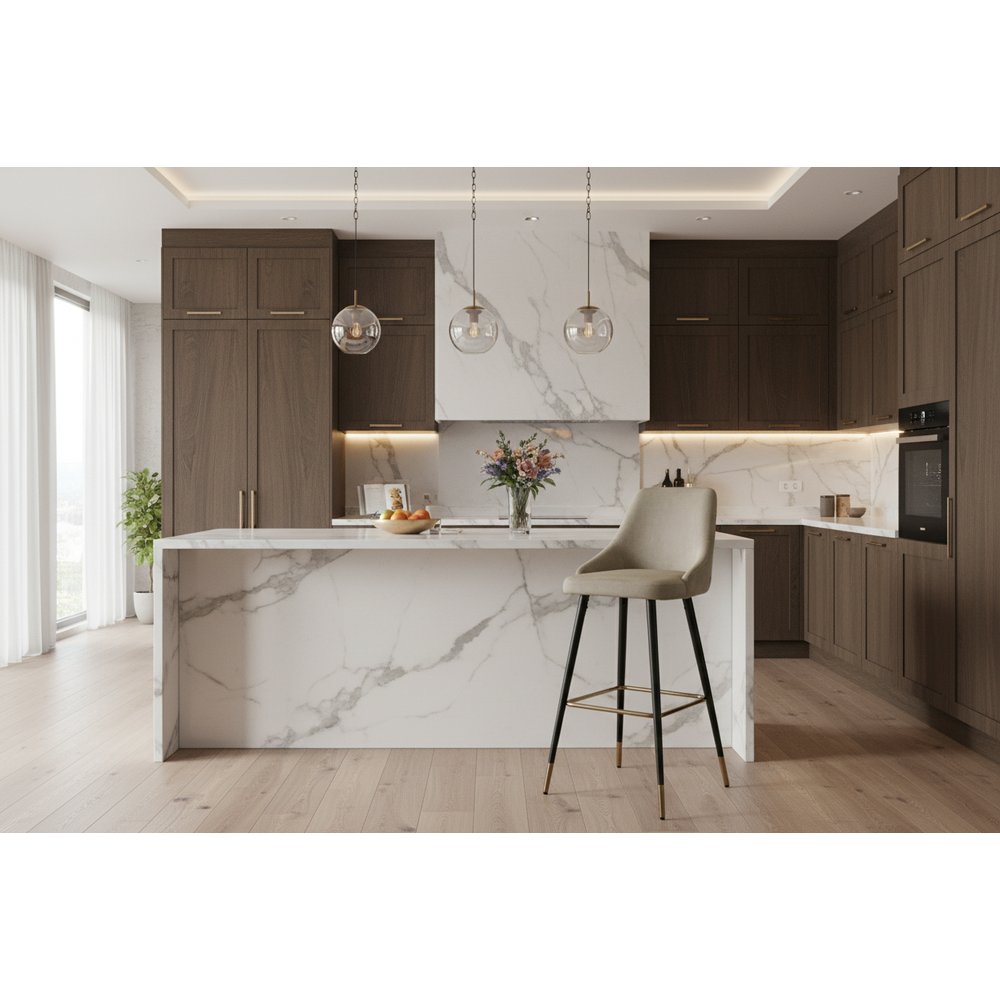
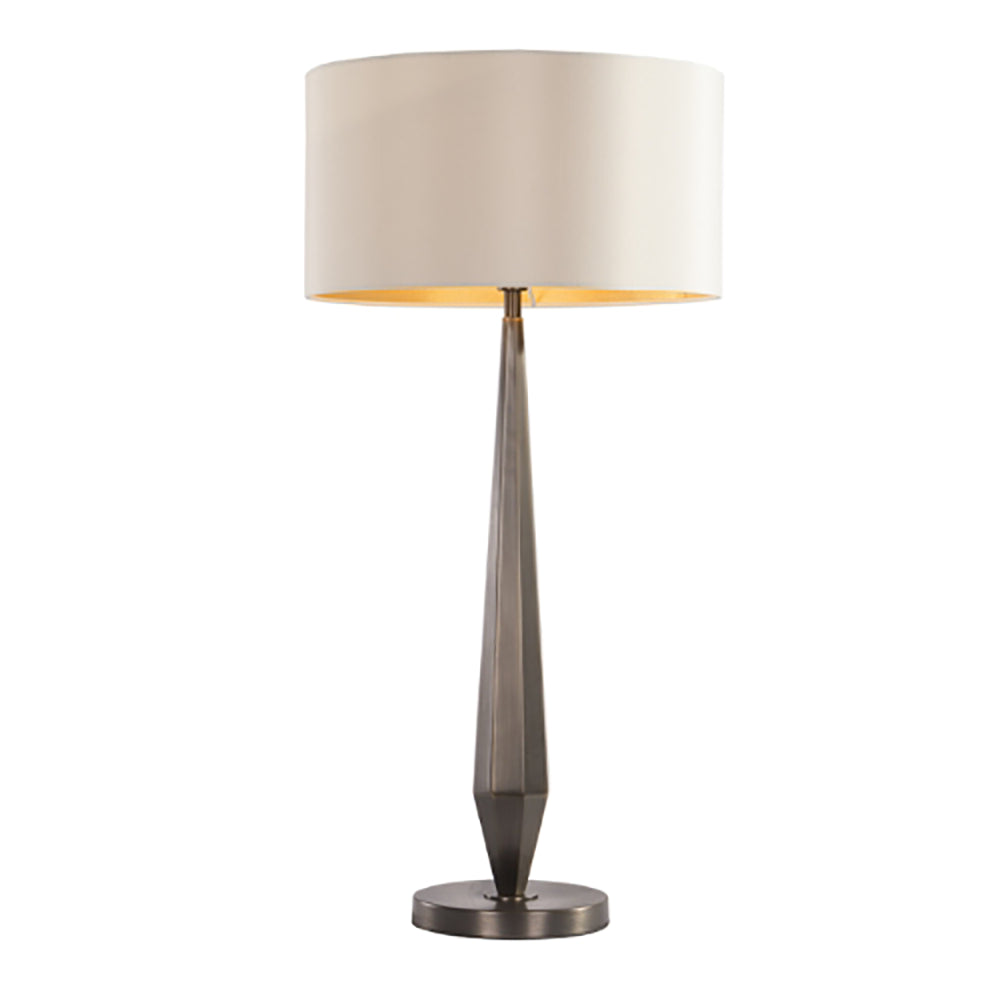
Choosing pieces that work together is where a scheme either sings or falls apart, and it is the part we enjoy most. A nickel floor lamp beside the armchair, a dark brass table lamp on the desk and a bronze wall light for the ambient layer will read as one family rather than three separate purchases.
| Layer | Job | Typical Fitting | Colour Temperature |
|---|---|---|---|
| Ambient | Lights the whole room | Pendant, wall light | 3000K |
| Task | Lights the desk surface | Table or desk lamp | 4000K |
| Accent | Adds warmth and depth | Floor lamp | 2700-3000K |
Colour Temperature
Watch out: buying all three layers in matching finishes but mismatched shade sizes is the most common reason a planned scheme still looks unfinished.
A home office only works when the light suits how you actually spend your day, and getting that right takes more than one trip to a lighting aisle. Renaissance Design Studio can take it off your hands: our in-house design team plans the full scheme with you, our showroom holds 22 displays you can see lit in person, and our white-glove delivery and assembly service means nothing arrives in flat packs. Complete the application form and let us build a home office you will love working in.