How to Coordinate a Home Fit-Out From Start to Finish
Table of Contents
- Setting Goals, Scope and a Realistic Budget Before You Start
- Building a Home Fit-Out Checklist, Room by Room
- Mapping the Home Renovation Timeline From Survey to Snagging
- Coordinating Trades During Renovation in the Right Order
- Procurement, Lead Times and Deliveries Without Surprises
- Writing Your Home Renovation Project Plan and Keeping Decisions on Record
- Booking Your Design Consultation to Start Your Fit-Out
- Frequently Asked Questions
Last Updated: October 29, 2026
Learning how to coordinate a home fit out is one of the hardest jobs in any renovation, and most of the stress comes from trades arriving in the wrong order. This practical guide is designed to help Irish homeowners keep a home fit-out plan on track from first survey to final snagging. Planning the sequence well matters more than most people expect, because a delay in one trade quietly pushes back every other.
Setting Goals, Scope and a Realistic Budget Before You Start
Start by writing down what the fit-out must achieve. Is the goal more storage, a better layout, new lighting, or a full modernisation? A clear answer keeps every later decision honest.
Next, set a budget you can defend. A realistic budget includes labour, materials, design fees and a contingency. A professional consultation, such as the Design Consultation Fee at €1,000.00, can help you test costs before you commit to a full scope.

Writing a design brief that the whole team can follow
A design brief is a single page that lists room functions, finishes, must-have fixtures and the things you will not accept. Share it with every builder, electrician and supplier. When everyone works from the same document, fewer changes slip through.
Keep the brief short. Long briefs get skimmed, and short ones get used.
Building a contingency into the budget
Set aside a contingency for unforeseen costs. Older homes can reveal hidden problems once walls and floors come up, so a buffer protects you from having to cut scope mid-project.
Building a Home Fit-Out Checklist, Room by Room
A room-by-room checklist stops small items from being forgotten. Work through each space and note the following:
- Existing layout and where walls or partitions might change
- Socket, switch and light positions
- Heating outlets, radiators and ventilation needs
- Storage, doors and flooring
- Finishes, colours and fixtures
Use the checklist as a living document. Tick items off as trades confirm them, and flag anything still open.
Mapping the Home Renovation Timeline From Survey to Snagging
A home renovation timeline runs in stages: survey, design, approvals, first fix, plastering, second fix, decoration, furnishing and snagging. Each stage depends on the one before it.
Build the timeline backwards from your target move-in date. Then add a buffer of a few weeks for delays, especially for bespoke joinery or imported furniture.
Coordinating Trades During Renovation in the Right Order
Trade sequencing is where most fit-outs quietly fail. The order itself is not complicated; what breaks projects is unclear ownership of each dependency. Build a simple responsibility matrix before anyone arrives on site: one row per trade, one column per decision they own, one column per decision they need from you, and a named contact for each.
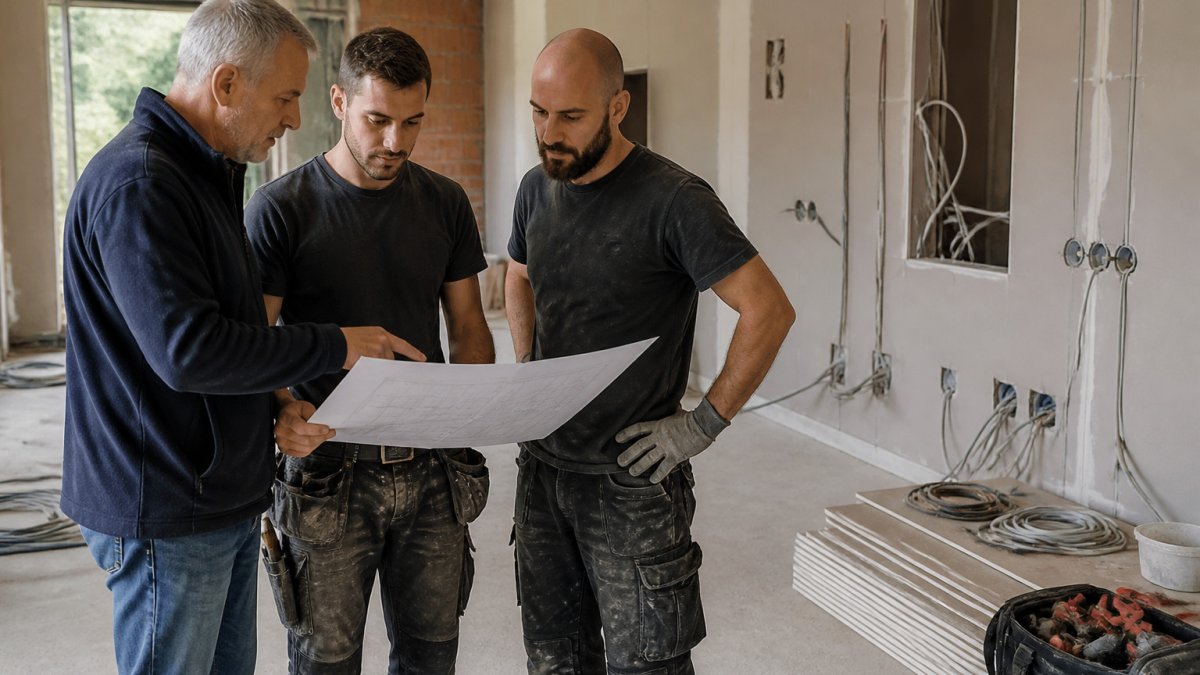
A workable sequence for a typical fit-out runs as follows:
- Enabling and strip-out, builder or main contractor removes partitions, old finishes and redundant services. Confirm asbestos and structural checks are complete before this starts.
- First fix (services), electrician and plumber run cables, pipework and ducting before any surface is closed up. Ventilation ducting and any underfloor heating should be installed at this stage too.
- Structural and partition work, studwork, blockwork and lintels go in once first-fix routes are agreed, so services are not cut through later.
- Plastering and screeding, walls and floors are closed and levelled. Plaster must dry before decoration; allow drying time in the programme rather than assuming it.
- Second fix, electrician and plumber return for sockets, switches, sanitaryware and radiators. Joiner fits doors, skirting and built-in furniture carcasses.
- Decoration and finishing, painting, tiling and flooring. Flooring usually goes last in high-traffic rooms to avoid damage.
- Furnishing and handover, freestanding furniture, blinds and soft furnishings, followed by snagging.
Each trade should sign off its stage before the next begins. A short weekly site meeting with the main contractor, the electrician, the plumber and the joiner is enough to catch clashes. Ask three questions at every meeting: what was finished since last week, what is blocked, and what does each trade need from another trade before its next visit. Record the answers in the decision log so nothing is agreed verbally and forgotten.
Where a main contractor is not appointed, you become the coordinator. That means owning the sequence, chasing confirmations and holding the programme, not just booking trades. If that role does not suit you, appoint a designer or project manager to hold it explicitly, in writing, before work starts.
The article sets out a sequence of trades, and the table below summarises each stage with the step it covers and the timing it needs.
| Stage | What happens | Timing note |
|---|---|---|
| Enabling and strip-out | Builder removes partitions, old finishes and redundant services | Confirm asbestos and structural checks first |
| First fix (services) | Electrician and plumber run cables, pipework and ducting | Before any surface is closed up |
| Structural and partition work | Studwork, blockwork and lintels go in | After first-fix routes are agreed |
| Plastering and screeding | Walls and floors are closed and levelled | Allow drying time before decoration |
| Second fix | Sockets, switches, sanitaryware, radiators and joinery | Electrician and plumber return |
| Decoration and finishing | Painting, tiling and flooring | Flooring usually last in high-traffic rooms |
| Furnishing and handover | Freestanding furniture, blinds, then snagging | Final stage before handover |
Procurement, Lead Times and Deliveries Without Surprises
Procurement is the part of a fit-out most likely to derail a programme, because lead times are set by suppliers, not by the site. Treat every order as a dependency with a date attached, and record it in the same plan as the build sequence.
Group purchases by lead time rather than by room:
- Long-lead items (often several weeks to a few months), bespoke joinery, made-to-measure blinds and curtains, imported tiles or stone, specialist sanitaryware and any furniture with a fabric or finish choice. Order these as soon as finishes are signed off, even if the room is months away.
- Medium-lead items (typically a few weeks), standard kitchen carcasses, radiators, doors and flooring. Confirm the delivery window in writing and check it against the programme.
- Short-lead items (days to a couple of weeks), paint, standard sockets and switches, sealants and basic hardware. These can wait until second fix is close, but keep a small buffer of each on site.
For every order, get four things in writing: the confirmed lead time, the delivery date window, the name of who will receive the goods, and the returns or damage policy. A verbal "about six weeks" is not a programme date.
Plan storage before the first delivery arrives. Decide which items can sit in a garage or spare room and which must stay wrapped until the room is ready. Large flat items such as doors and worktops need to be stored flat and dry; stone and tiles should be checked on arrival for shade and batch variation before they are laid.
Inspect every delivery at the point of receipt. Count boxes against the delivery note, photograph any damage before signing, and note shortages on the paperwork. A damaged item discovered weeks later is much harder to resolve than one flagged on the day.
Keep a contingency for procurement as well as for labour. A common pattern is to hold back a small reserve specifically for expedited delivery or a replacement item when something arrives damaged or out of specification. That reserve is separate from the main build contingency and stops a single late delivery from forcing a scope cut elsewhere.
Writing Your Home Renovation Project Plan and Keeping Decisions on Record
Your project plan should bring the brief, budget, timeline and checklist together in one place. Record every major decision with its date and who approved it. A simple decision log saves arguments later, and it helps when a change affects cost or schedule.
Review the plan every two weeks. If a change appears, update the budget and timeline straight away.
Booking Your Design Consultation to Start Your Fit-Out
When you are ready to move from planning to action, a professional consultation can make the difference. Renaissance Design Studio's Design Consultation Fee at €1,000.00 covers an assessment of your space and goals before any work begins. Many homeowners also check whether hiring an interior designer for renovation is worth it before committing, since a designer can coordinate trades and decisions on your behalf.
Start with a clear brief, a realistic budget and a sensible trade order, and the rest of the fit-out becomes far more manageable.
Frequently Asked Questions
What does a home fit-out include?
A home fit-out typically covers the interior work needed to make a property liveable and finished, including layout changes, joinery, electrical and plumbing first fix and second fix, flooring, decoration, lighting, window treatments and furniture. A full design and fit-out service can handle these elements, and the installation and fit-out menu, priced at €120.00, can include delivery, room set-up, packaging removal and an interior designer on site for finishing touches. Agree the scope in writing before work begins so that every trade and supplier works from the same list.
How long does a home fit-out take?
The duration depends on the size of the property, the amount of structural work and how quickly decisions are made. Bespoke furniture and joinery often carry the longest lead times, so ordering early keeps the programme on track. Build the timeline backwards from the handover date, allow time for snagging, and treat the schedule as a living document that is reviewed weekly. Delays usually come from late decisions rather than from the building work itself.
How can you keep a home fit-out on budget?
Set a budget that includes a contingency of around 10 to 15 percent, fix the design brief before ordering, and record every change with its cost. Ask for a detailed estimate from each trade and compare it against the total. A full design and fit-out service provides an estimated quote after the brief is reviewed, which can be approved before any work starts. Keeping a single change log is the most effective way to stop costs drifting.
Should you hire an interior designer or project manager for a home fit-out?
A designer focuses on layout, finishes and the look of the finished rooms, while a project manager concentrates on programme, trades and budget. On a large or complex fit-out, one firm that does both reduces the number of handoffs and the risk of conflicting decisions. A turn-key service with an in-house design team can give you a single point of contact to coordinate the design, sourcing and installation stages together.