How to Prepare for an Interior Design Consultation for Your Renovation
Last Updated: 30 October 2026
Quick Summary
An interior design consultation for home renovation in Ireland is only as useful as the preparation you bring. Write a brief covering property type, rooms in scope, budget range and timeline, gather measurements and photographs, and prepare questions on experience, fees and contracts before the first meeting.
- Write a brief covering property type, rooms in scope, budget range in euro, and timeline.
- Bring room dimensions or a floor plan, plus daylight photographs or video of each room.
- Ask for written inclusions and exclusions, since site visits and sourcing are often extra.
- The Design Consultation Fee at Renaissance Design Studio is €1,000.00.
- An in-home visit lasts two hours and covers a maximum of three rooms.
Table of Contents
- Why Preparation Shapes the Value of an Interior Design Consultation
- Writing Your Interior Design Brief Template
- What to Bring to Your First Meeting
- Questions to Ask an Interior Designer Before You Commit
- How Long an Interior Design Consultation Takes
- What Happens During and After the Consultation
- Your Interior Design Consultation Checklist and Next Step
- Frequently Asked Questions
Why Preparation Shapes the Value of an Interior Design Consultation
An interior design consultation for home renovation in Ireland is only as useful as the information you bring.
Many homeowners assume the designer will do the thinking.
Preparation also protects your money. Changes made after furniture is ordered or walls are plastered cost far more than changes made on paper.
This guide covers what to prepare, what to bring, and what to expect when planning a renovation or full fit-out.
Writing Your Interior Design Brief Template
A written brief gives your designer a clear starting point. It need not be long or polished, only honest and specific.
- Property type and age: Is it a period house, a new-build apartment, or a converted attic?
- Rooms in scope: List every room you want to change, and mark the ones you do not.
- Budget range: Give a realistic range in euro. Designers can work with honest numbers far better than vague ones.
Then describe how you live: who uses each room, when, and for what.
Finally, list your must-haves and dealbreakers.
Brief template: Property type | Rooms in scope | Budget range (EUR) | Start date and deadline | How each room is used | Must-haves | Dealbreakers | Styles you like and dislike
What to Bring to Your First Meeting
Bring materials that show your space and taste. A designer learns more from a few good photographs than from a long verbal description.
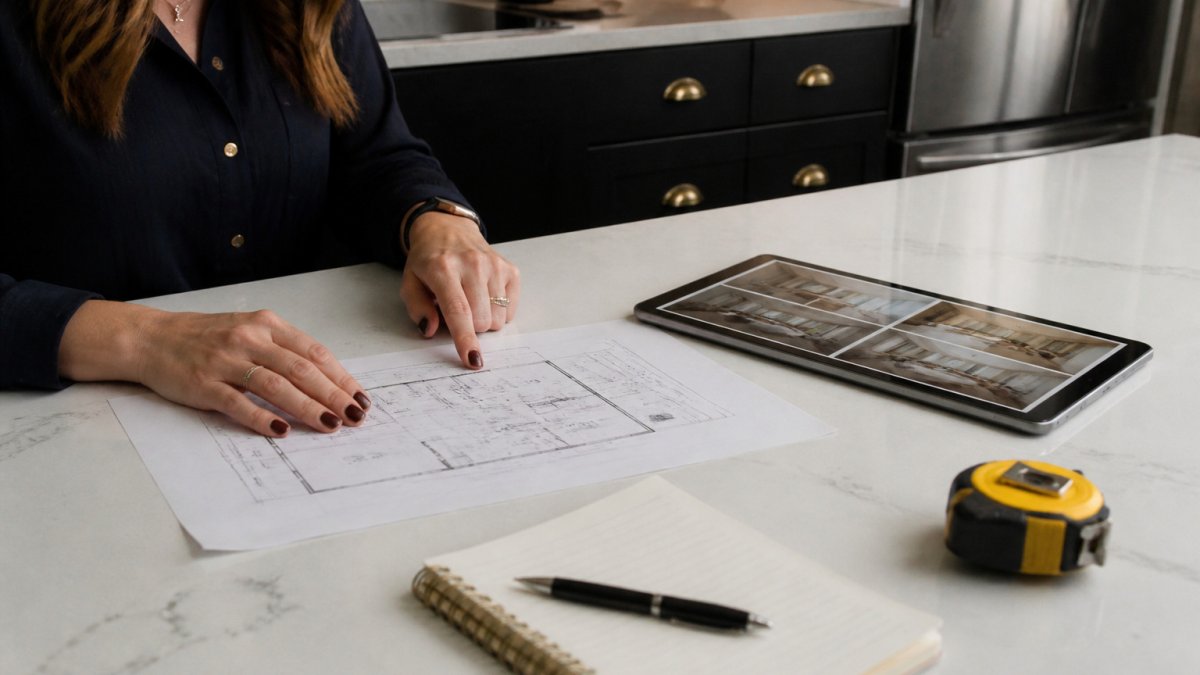
- Measurements: Room dimensions, ceiling height, window and door positions, and the location of existing sockets and radiators.
- Floor plans: A drawing, even a rough hand-sketch, is valuable. If you have architectural plans from a builder or architect, bring those too.
- Photographs or video: Take images of each room in good daylight, and include wide shots and close-ups of features you want to keep.
Renaissance Design Studio's showroom consultation asks clients to bring room dimensions or floor plans, plus images or video of the space, to the first visit.
Questions to Ask an Interior Designer Before You Commit
Choosing a designer for a renovation is a selection exercise, not a personality test. The right questions reveal whether a designer has the experience, insurance, contract discipline and communication habits a renovation demands.
1. Relevant renovation experience
Ask how many renovation projects the designer has completed in the last two years, and how many involved structural work, extensions or services upgrades rather than decoration alone. A designer who mainly stages occupied homes for sale has a different skill set from one who coordinates builders, electricians and plumbers on a live site. Ask for two or three recent projects of similar scale and type, and ask what went wrong on them.
2. Portfolio fit, not portfolio envy
A beautiful portfolio is not the same as a relevant one. Look for projects with a similar property age, room count and budget band; a designer whose work is entirely new-build apartments may struggle with a period terraced house, and vice versa. Ask which parts of the portfolio are closest to your brief, and ask to see the parts not photographed, storage, utility rooms, lighting plans and joinery details often reveal more about working method than the hero shots.
3. References and site visits
Ask for two recent client references you can contact directly, and ask each referee three things: whether the designer stayed within the agreed fee, whether variations were documented in writing, and whether they would use the designer again. Where possible, visit a completed project to see the quality of finish, the accuracy of the drawings and how the space actually works.
4. Insurance and professional standing
Ask for evidence of professional indemnity and public liability insurance, and confirm the levels of cover in writing. Check whether the designer belongs to a recognised professional body and what that membership requires in conduct, continuing professional development and complaints handling. Membership is not a guarantee of quality, but it gives you a route to redress.
5. Contracts, fees and variations
Ask for a written contract or letter of engagement before any work begins. It should set out the scope, fee structure, payment schedule, number of revision rounds, deliverables, timeline and the process for agreeing variations. Ask specifically how variations are priced and approved, and who coordinates other consultants and trades. A designer who is vague about the contract is a risk on a renovation, where scope changes are common.
6. Communication and decision-making
Ask how often you will receive updates, who your main point of contact will be, and how decisions are recorded. Ask whether you will work with one designer throughout or be handed to a junior after the first meeting. Renovations generate hundreds of small decisions; a clear decision log and a weekly written update prevent most disputes.
7. Coordination with other professionals
Ask how the designer works with architects, engineers, builders and specialist trades. Clarify who leads the design team, who issues drawings, who checks site progress and who signs off completed work. Conflicting advice between designer and builder is a common cause of delay, so agree lines of responsibility in writing at the outset.
8. Fee transparency
Ask for the fee structure in writing and compare like with like. Renaissance Design Studio's Design Consultation Fee is €1,000.00 and covers services from selecting individual pieces through to a turnkey fit-out designed by one of the studio's in-house interior designers.

For more on how to weigh these choices, read Are the Best Interior Designers Worth Hiring for Renovation?, and check How Much Does Luxury Interior Design Cost? for a fuller picture of likely spending.
Before committing to a designer, compare their answers on the points below, using the same questions for every candidate.
| Question area | What to ask | Why it matters |
|---|---|---|
| Renovation experience | Recent projects of similar scale and type | Shows coordination skill on live sites |
| Portfolio fit | Projects with similar property age and budget | Relevance beats polish |
| References | Two recent clients, contacted directly | Tests fee control and variations |
| Insurance | Professional indemnity and public liability | Gives you redress if things go wrong |
| Contract | Written scope, fee and payment schedule | Scope changes are common on renovations |
| Fee transparency | Inclusions and exclusions in writing | Site visits and sourcing are often extra |
| Fee example | Design Consultation Fee of €1,000.00 | Covers services from pieces to turnkey fit-out |
How Long an Interior Design Consultation Takes
The length of an interior design consultation depends on its format.
An in-home consultation at Renaissance Design Studio includes a two-hour home visit with one of the studio's interior designers.
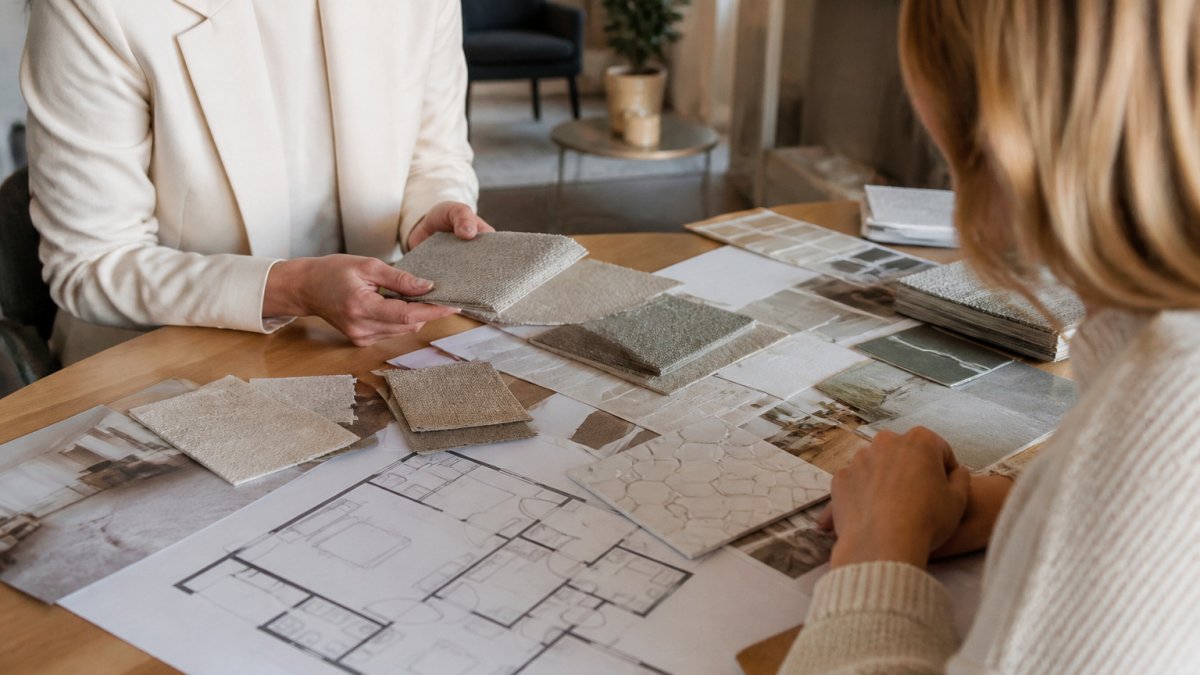
After a showroom consultation, the studio creates mood boards for the rooms discussed, showing the complete look, sized to your space and style.
Plan the wider timeline too. Design approval, ordering, and delivery all take time, and bespoke pieces from overseas suppliers can add weeks.
What Happens During and After the Consultation
Knowing the sequence removes much of the uncertainty. During the consultation, the designer will talk through your brief, measure the space, and note your priorities. They should also tell you what they need from you next, and flag any constraints that could affect the design before you spend money on drawings or orders.
The meeting itself
A typical in-home consultation lasts one to two hours. The designer will walk each room in scope, measure key dimensions, photograph features, and ask how the space is used at different times of day. They will test your brief against the building: ceiling heights, window positions, structural walls, services routes and damp or ventilation issues all shape what is possible.
Irish renovation constraints to raise early
A consultation is the right moment to surface the regulatory and practical constraints that apply to your property. The designer should be able to tell you which of the following are likely to apply, and when you need to bring in a suitably qualified professional.
- Planning permission: Some extensions, changes of use and works to protected structures need permission. Confirm the position with the local planning authority before committing to a design that depends on permission.
- Building regulations: Works must comply with the Building Regulations in force in Ireland. A designer can shape the layout, but compliance is confirmed through the building control process, often with input from a certifier or engineer.
- Protected structures and architectural conservation areas: If the property is a protected structure or lies within an architectural conservation area, works, including internal alterations and some repairs, may require declaration or permission. Bring any previous declarations or correspondence with the planning authority to the consultation.
After the meeting
After the consultation, a full design and fit-out project at Renaissance Design Studio follows a clear path. You meet an interior designer to discuss requirements, the brief is reviewed, and you receive an estimated quote.
More generally, expect the designer to issue a written summary of the brief, a fee proposal and a schedule of next steps.
Coordination with the wider team
Renovation involves several professionals, and the consultation should clarify who does what. Architects and engineers often lead on structural and regulatory matters, while builders lead on construction and site safety. Agree the hand-offs in writing, who issues drawings, who checks site progress, who signs off completed work, and keep a single decision log.
Keep notes throughout, and make sure every decision is confirmed in writing. This protects both you and the designer as the project develops.
Your Interior Design Consultation Checklist and Next Step
Use this checklist to prepare before your first meeting:
- Written brief completed, including budget range in euro
- Room dimensions and floor plan gathered
- Photographs or video of each room taken in daylight
When you are ready, the next step is to book your consultation. Renaissance Design Studio can take your brief from first conversation through to a finished home. Complete the application form to get started, and bring this checklist with you to make the most of your first meeting.
Frequently Asked Questions
What happens during an interior design consultation?
A consultation usually begins with a discussion of your goals, budget and how you use each room. The designer then surveys the space, measures it and notes any structural or practical constraints. Renaissance Design Studio's in-home consultation includes a two-hour visit by one of its interior designers covering up to three rooms, where requirements are discussed room by room. Afterwards, mood boards may be created to show the intended look for the rooms discussed. Use this stage to ask about the process before committing to a full design and fit-out.
How long does an interior design consultation take?
The in-home consultation at Renaissance Design Studio is a two-hour home visit covering a maximum of three rooms. Showroom consultations depend on how many displays you want to explore. Plan extra time afterwards for reviewing mood boards, which are created for the rooms discussed based on the size of the space and the style you want to achieve. A full design and fit-out brief takes longer, because the designer reviews your requirements before an estimated quote is provided. Booking in advance helps keep the process on schedule.
What should I bring to a home renovation design consultation?
Bring the room dimensions or floor plans if you have them, along with photographs or video of each space. Images help the designer understand light, layout and existing features quickly. Note the furniture and finishes you plan to keep, and list any style references you like. Having these details ready helps the designer gather the information needed during the visit and reduces the time spent on basic measurements.
What questions should I ask an interior designer before renovating?
Ask how the designer will approach your brief, how your preferred style will be reflected in the design, and how changes are handled if you are not happy with the direction. Clarify the estimated quote process for a full design and fit-out, and ask how the team coordinates delivery and assembly. Renaissance Design Studio offers white glove delivery and assembly, so ask what that covers for your project.